If we were to simplify, as much as possible, all of the ways in which flowering plants can sexually reproduce, we might say that all the parts necessary are held within the petals of a flower. In humans, reproduction begins when a sperm cell and an egg cell fuse to create a zygote, which, in the right conditions, eventually develops into a fetus. The plant’s equivalent of sperm and egg cells are pollen grains and ovules, respectively; they are usually located in the floral structures found (again, usually) at the centre of a whorl of petals. Pollen is produced by the anther and filament – collectively known as the stamen – and reaches the ovules within the ovary via the stigma and style (the pistil): when a grain of pollen lands on the stigma, the pollen germinates and travels down the style, and fuses with an ovule inside the ovary; a seed is thus formed.
This may seem like a basic lesson in plant biology; a universal botanical truth. But in truth, a basic under-standing is just that: basic. A layperson’s understanding of plant reproduction is an oversimplification of the fascinatingly complex mating systems that plants exhibit.
Nature is rarely binary and it is never absolute. Depending on the species, a plant’s reproductive organs – its stamens and pistils – can be found in different figurations. Variously, stamens and pistils can be found both within the same flower (such a plant may be called a hermaphrodite); split between separate flowers on a single plant (monoecious); or, most rarely, split between different plants of a single species (dioecious). While some plants are able to self-fertilise, a large number are self-incompatible. Undoubtedly it would be more convenient for plants to reproduce through self-replication, but evolution favours genetic diversity, which is more likely achieved when cross-pollination happens between different plants. Self-incompatibility is a biological and evolutionary safeguard, driving variation within the population of a species and increasing its chances for survival.
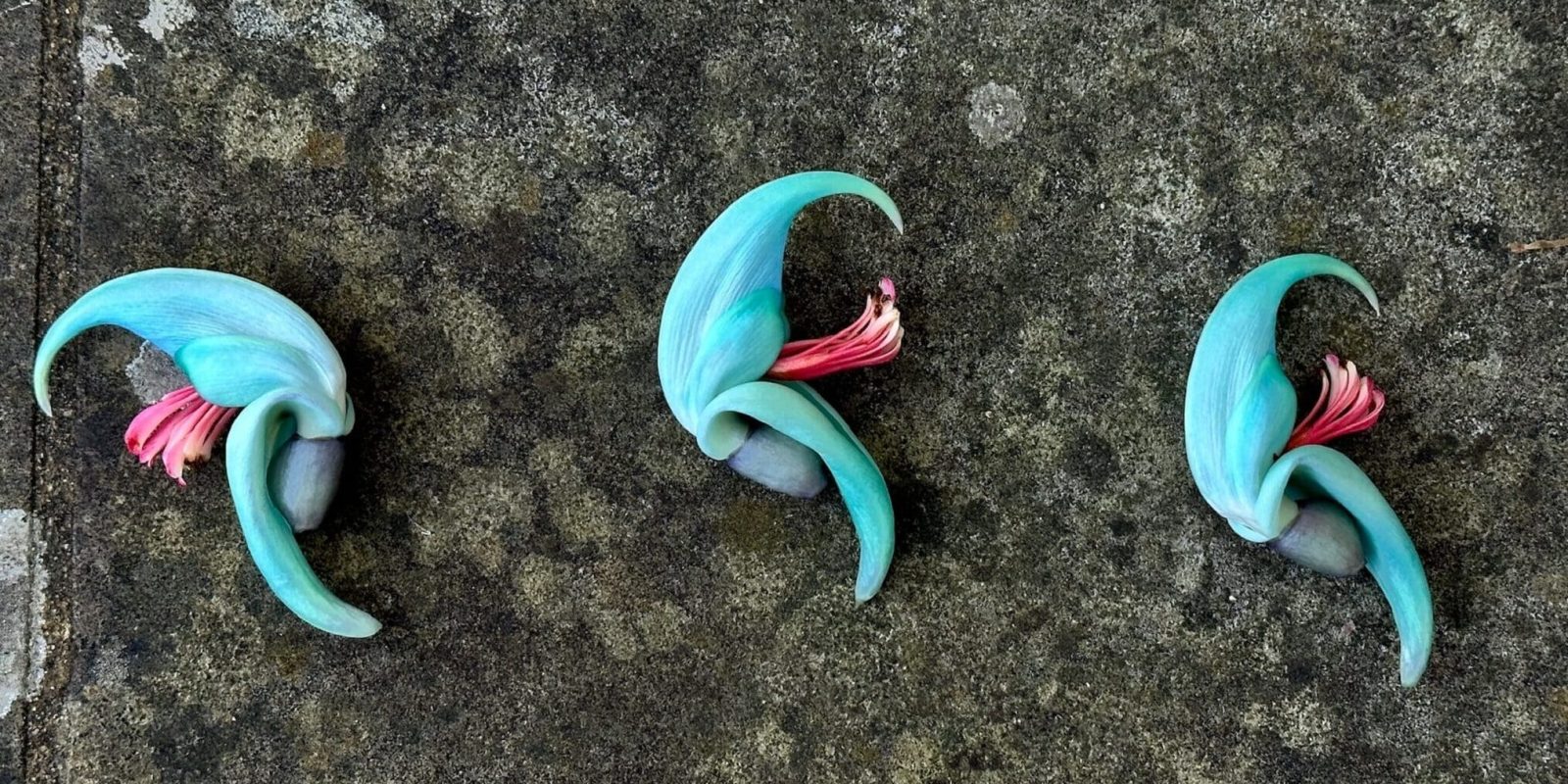
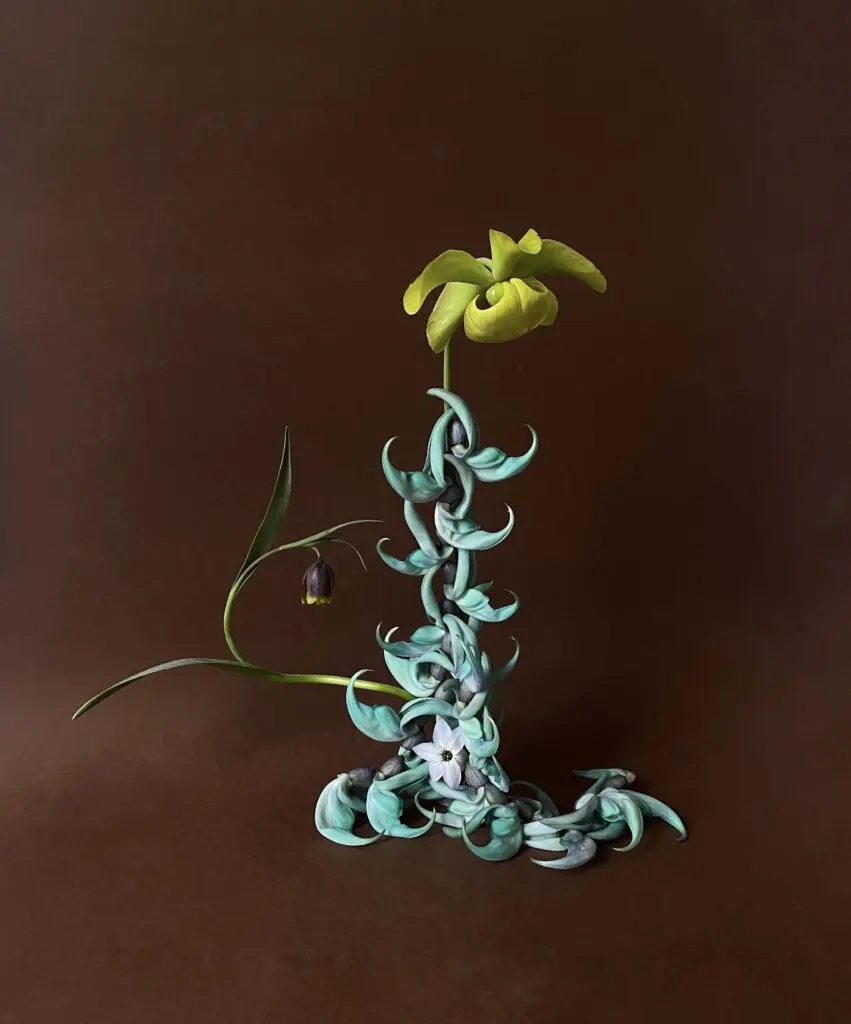
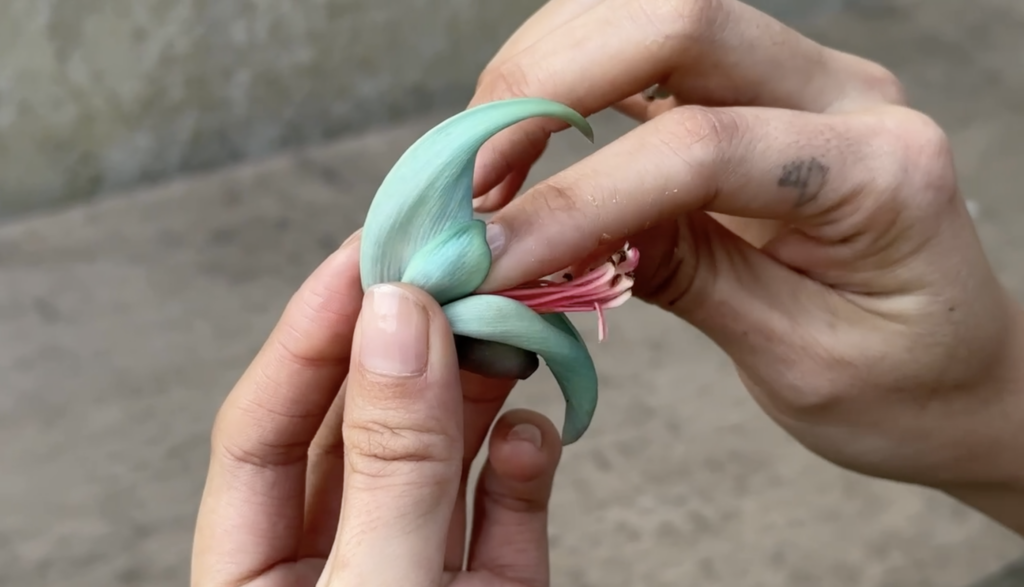
Observe, for example, the spectacular jade vine, Strongylodon macrobotrys. Endemic to a few islands in the Philippines, the jade vine produces long, cascading clusters of bright turquoise flowers that look like butterflies with folded wings. Its species epithet macrobotrys comes from the Greek words makros meaning ‘long’ and botrys for ‘a bunch of grapes’. The lower, hook-shaped petal of the flower encases its reproductive organs, both stamen and pistil. Its amazing mechanism of pollination was first demonstrated to me by a friend at the Royal Botanic Garden in Edinburgh: when she pressed her finger down on the widest region of the lower petal, the stamens flicked out from the flower like a knee-jerk reflex, and deposited pollen onto her fingernail. In the wild, the flower’s reflexes would be triggered by bats feeding, upside down, on the nectar gathering in the flower’s folds. Pollen would then be released onto the body of the bat, which then flies off to another flower, or another plant.
Such a graceful mechanism of cross-pollination seems specifically choreographed for this plant and its pollinator. But these roles can sometimes be adopted by others. When plants are uprooted from their natural environments and find themselves in the foreign glasshouses of botanical gardens, horticulturists are frequently asked to be the bat’s understudy.
On one of the first warm days of the year, my friend and I were on a pilgrimage to view the magnolias at London’s Kew Gardens, when we came across the jade vine flowering inside the Princess of Wales Conservatory.
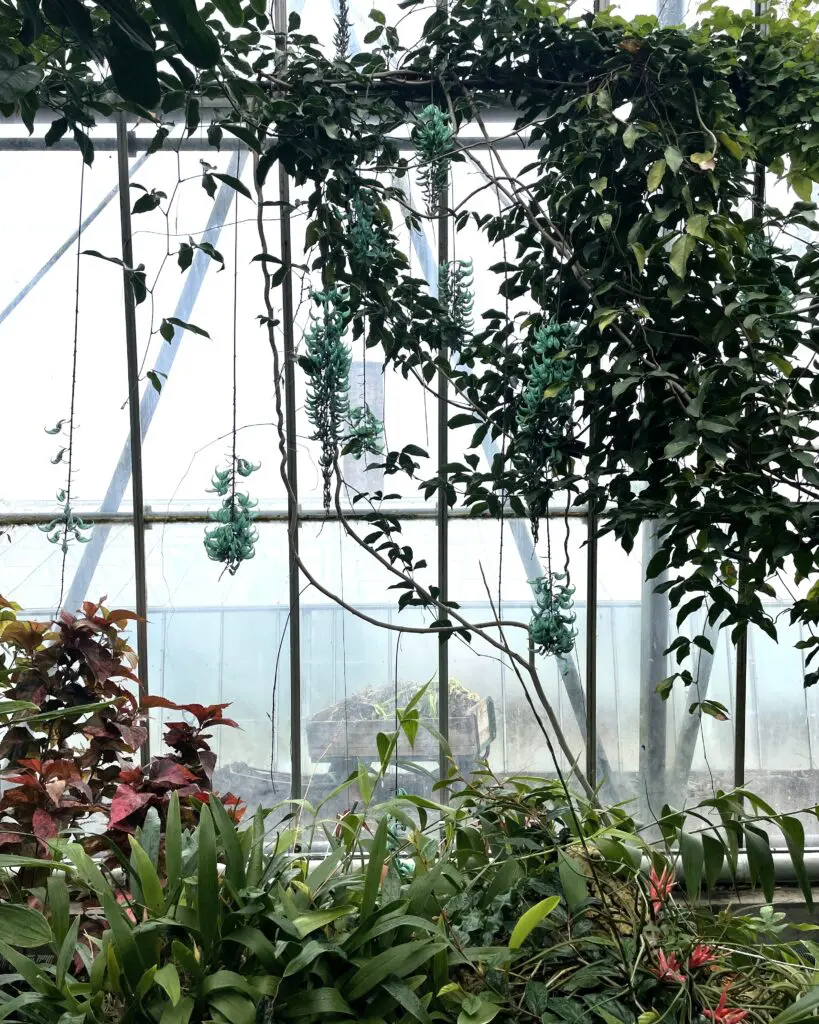
A jade vine in flower in the Tropical Glasshouse at the Royal Botanic Garden Edinburgh
A few of its flowers had fallen to the ground intact, and so we pocketed them for closer observation. Later, we found a camellia with palm-sized scarlet flowers and a dense centre of stamens; two fallen flowers from the camellia joined the small collection in our pockets. Outside the orangery, we sat down and, like children, played with what we had gathered: two camellia heads, five jade vine flowers, a stack of magnolia leaf skeletons and a few thick, brown loquat leaves.
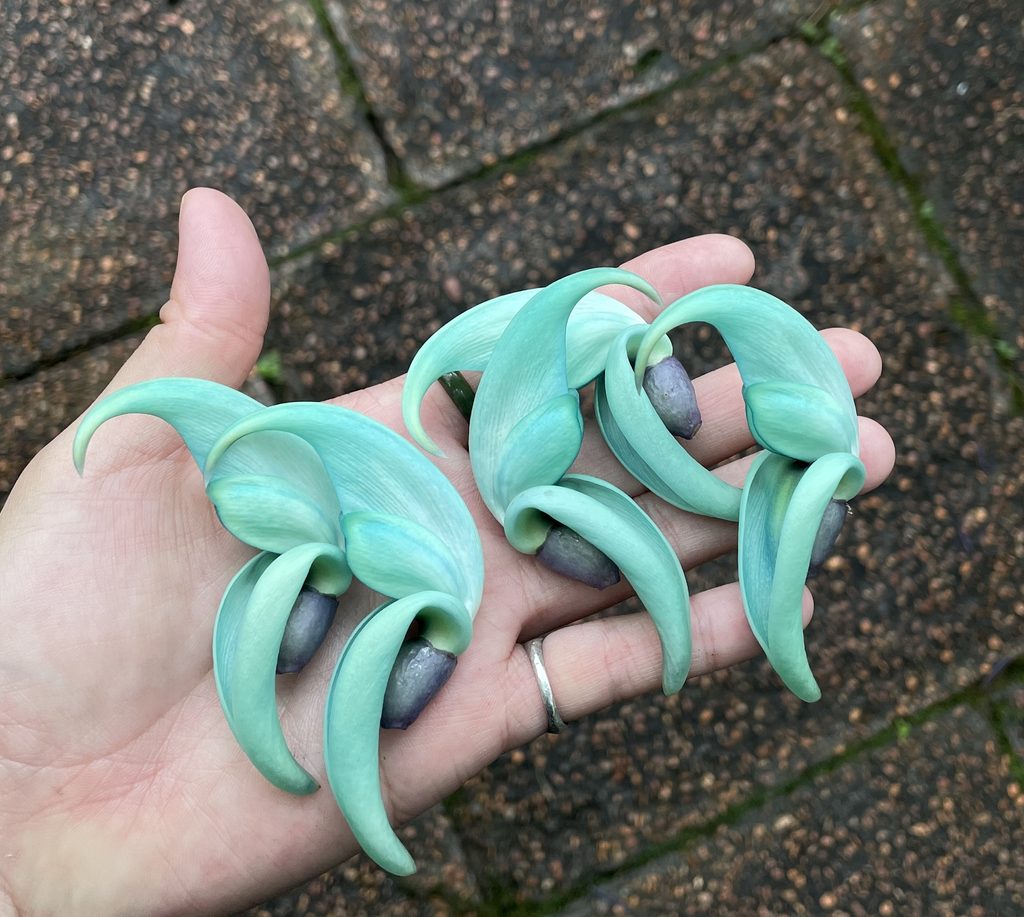
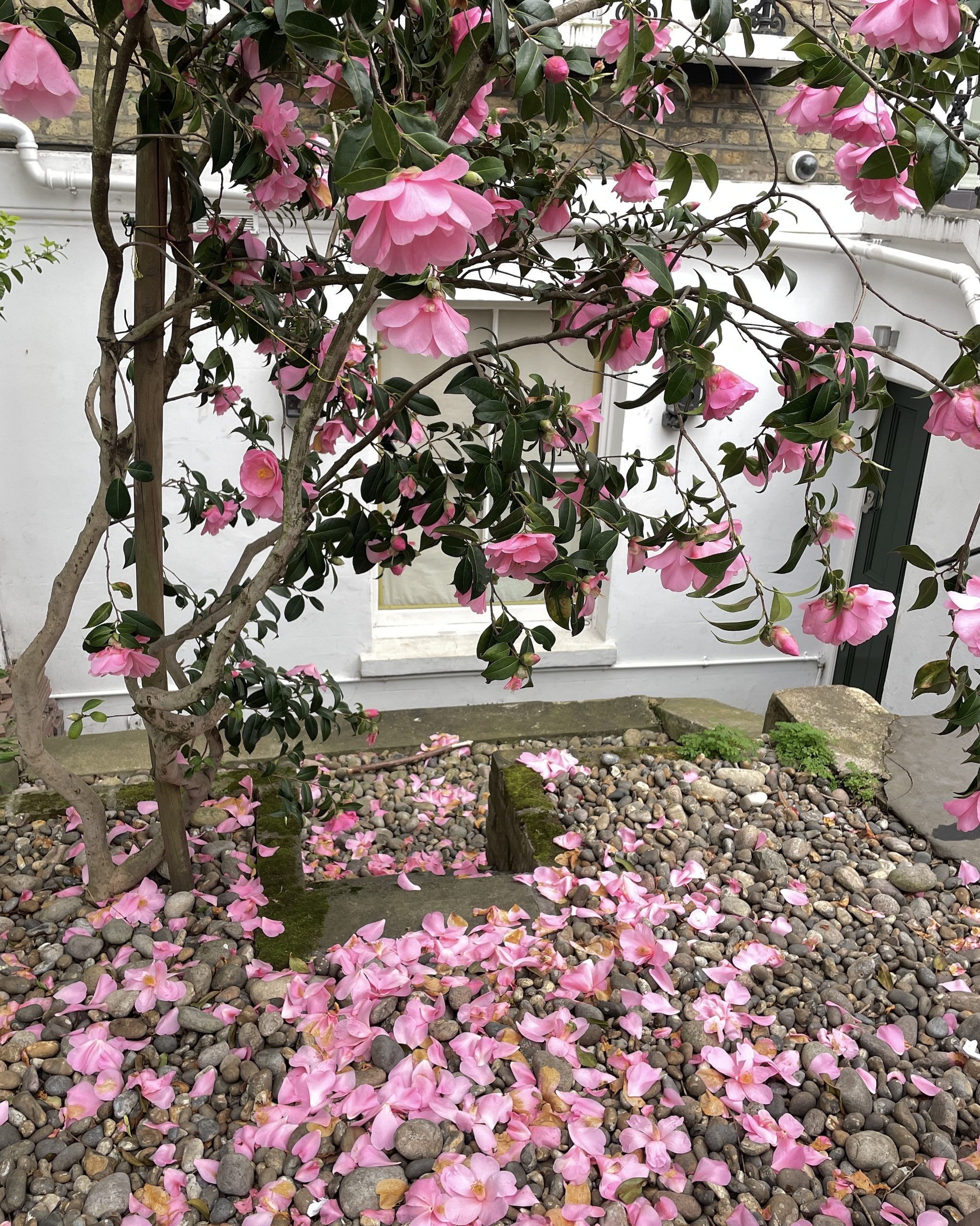
Absentmindedly, I used my fingernail to prise away a small cluster of spoon-shaped stamens from one head of camellia – each stamen tiny, a bright magenta that faded into cream at the tip – and inserted them into the centre of a jade vine flower. I was just fooling around: the mixing-up of pink and blue parts from different flowers looked strange, almost alien. And yet, as the jade vine’s stamens flicked out reflexively, they perfectly met the curve of the camellia stamens. These were two species that would never meet in the wild, but to me, in that moment, I had the distinct feeling that there was some evolutionary adaptation at work. Although there was no biochemical reaction between the two flowers that could lead to even a hypothetical reproduction – this was a meeting of two stamens, not a stamen and a pistil, which are the classical components of fertilisation – this unexpected morphological compatibility served as a reminder of possibility.
Living organisms have the potential to exist beyond the binary systems that we so often place them into. In early human development, all embryos hold the potential to form either male or female reproductive structures. Around the fifth or sixth week in utero, both Müllerian ducts (which form the uterus, fallopian tubes and cervix) and Wolffian ducts (which form the vas deferens, seminal vesicles and epididymis) are present. The sry gene (usually located on the y chromosome) is the key factor that influences which developmental pathway is taken: if the sry gene is expressed, it triggers the formation of testes and the production of male hormones. A gene, however, is not like a simple on/off switch; rather, it is like a volume control. A person with XY chromosomes may develop traits associated with female anatomy if their SRY gene does not express itself, while an individual with XX chromosomes and an active SRY gene may nevertheless develop male reproductive structures. Like most of biology, human sex development is influenced by a matrix of interactions between genes and hormones, as well as chance and timing.
In 2025, the Supreme Court of the United Kingdom ruled that the term ‘woman’ should be defined solely by the ‘assigned biological sex at birth’ – a decision that entirely disregards the biology of sex determination. This reductive binary system – which assumes a this-or-that understanding of xx or xy chromosomes – was obvious to me from my earliest biology lessons in high school. It is basic biology – too basic. Yet we have legal professionals issuing potentially catastrophically harmful definitions of biology, based on oversimplification. These have been issued without the input of biologists, medical experts or trans people, and with less scientific scepticism than a teenager in a biology classroom.
Rife throughout history is the manipulation of ‘nature’ and what is ‘natural’ to justify the oppression or erasure of groups of people. Slavery, sexism and racism have all been championed on the basis of biology at one point or another; it is exactly this basic human understanding that nature itself defies, almost triumphantly.
We are told that definitions should be fixed, with no room for blur or overlap between categories of people or plants. But nature teaches us otherwise. Whether with regard to flowers, genes or gender, systems are not rigid – they are fluid, responsive and ever-adapting. We should not be guided by the fear of what will not reproduce.
Instead, we should hold onto an imagination of forms, particularly of those thought to be incompatible, that nevertheless meet and establish connections. My jade vine and camellia ‘hybrid’ may never bear fruit, but that was not the objective of their coming together. Even in the absence of a seed, and even just for a moment, something meaningful was formed.