As an intersectional environmentalist and multidimensional designer, I first discovered Queer Ecology through the work of Alok V Menon and a book report they posted on social media on Evolution’s Rainbow: Diversity, Gender, and Sexuality in Nature and People (University of California Press 2013). This was a pivotal moment for me, it set off a lightbulb in my brain and led me down a rabbit hole of research. As a queer person myself, the framework of queer ecology resonated with me because there is often the argument made against queer people that our ways of being are “unnatural.” To be able to defend myself with real examples within nature that prove that queerness extends beyond the human experience was deeply comforting to me, especially as someone who feels so connected to the natural world.
A couple of years ago, when I first became interested in this subject, there were not as many scientific resources as there are today. Popularity of this ecological framework has grown through creative communication, art practices and on social media. When it comes to science communication, creative communication is a big part of getting the public to understand and accept your concepts.
As a printmaker, I was inspired by this emerging field of study of Queer Ecology and wanted to reflect it in my work in an educational way. I wanted to create a series of iconic animals, taking cues from charismatic megafauna, large, well-known, and popular animal species, like tigers, elephants, and pandas, that conservationists use to generate public support and funding for environmental goals. I decided to design tarot-inspired prints to highlight each organism’s unique example of queer ecology, essentially my own version of “charismatic queer ecological organisms.” I wanted them to be a series that people could resonate with, collect, and discuss in their own communities.
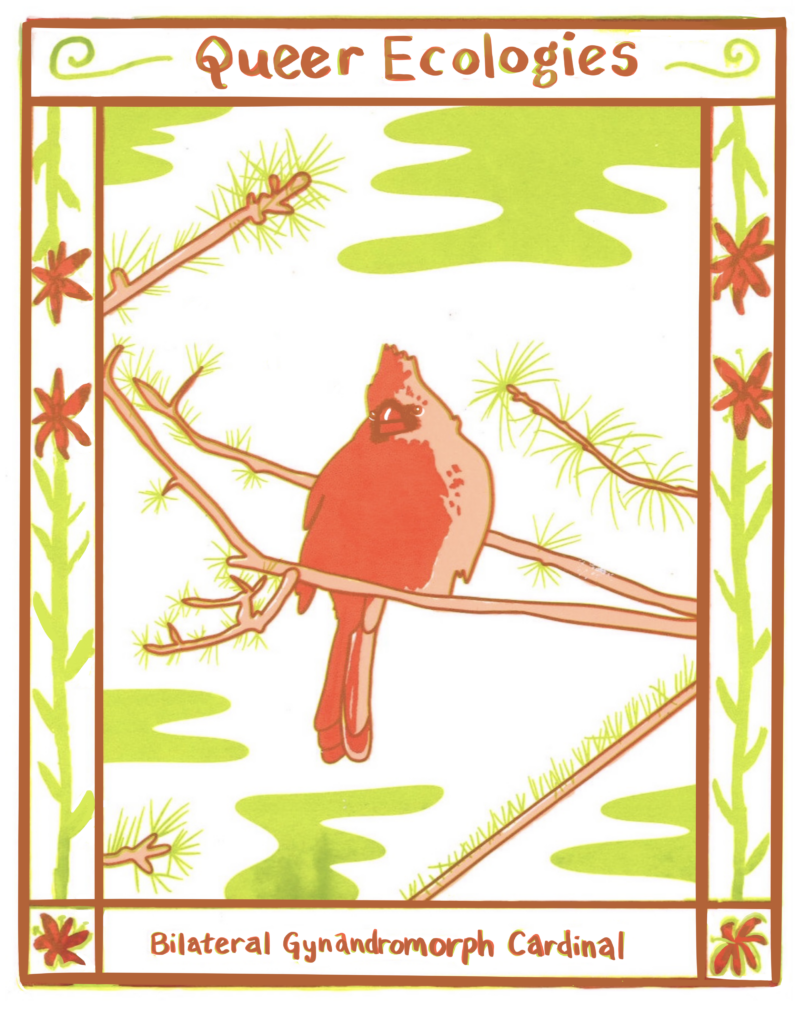
Bilateral Gynandromorph Cardinal:
Bilateral gynandromorphism means that an animal is genetically and visibly half male and half female symmetrically on their body. The phenomena is most noticeable in animals with sexual dimorphism meaning that males and females have distinct appearances so it is easy to recognize the visible differences between the two.
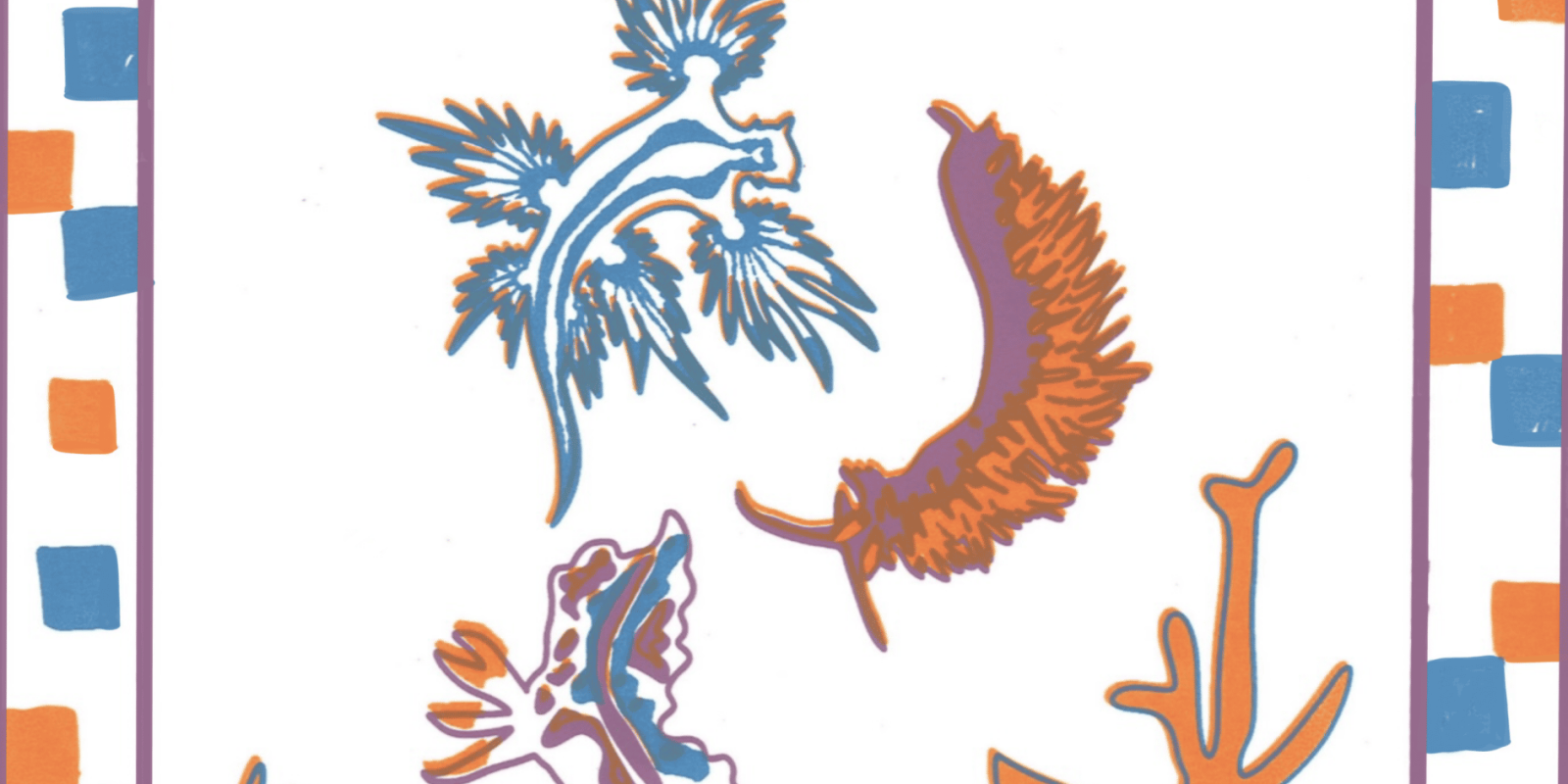
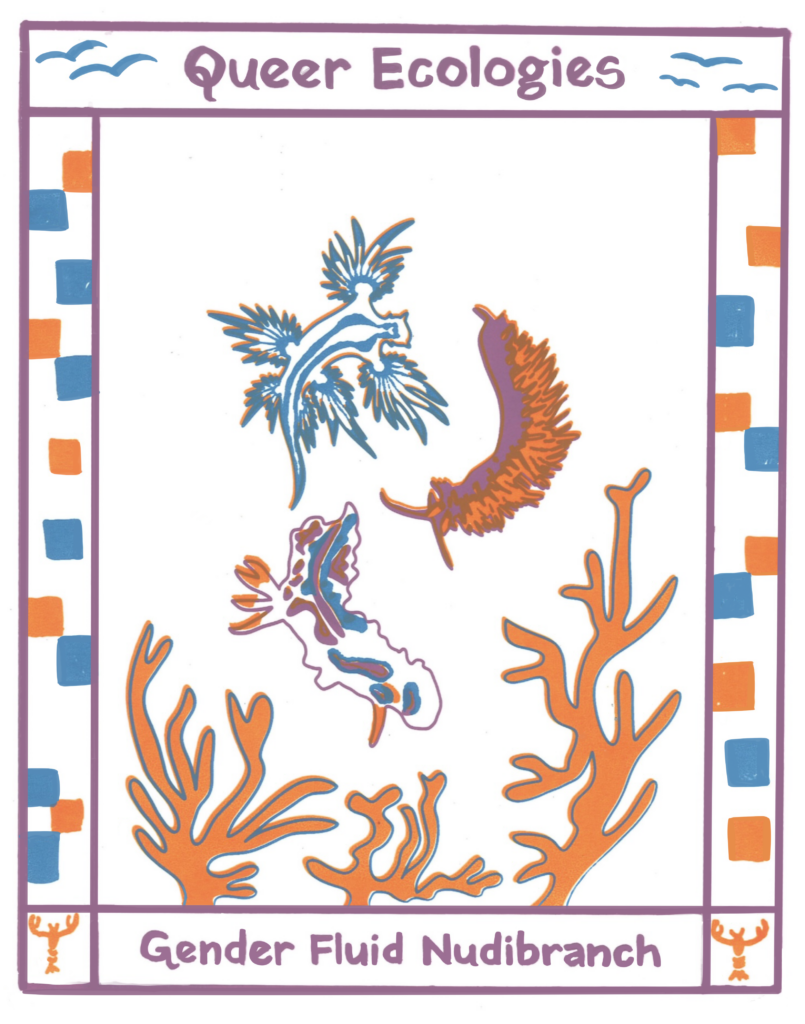
Gender Fluid Nudibranch:
Nudibranchs have both male and female reproductive organs that are located internally on the right side of their bodies. During reproduction, sperm is exchanged from both partners in a dance-like courtship where it is stored until the eggs are ready for fertilization.
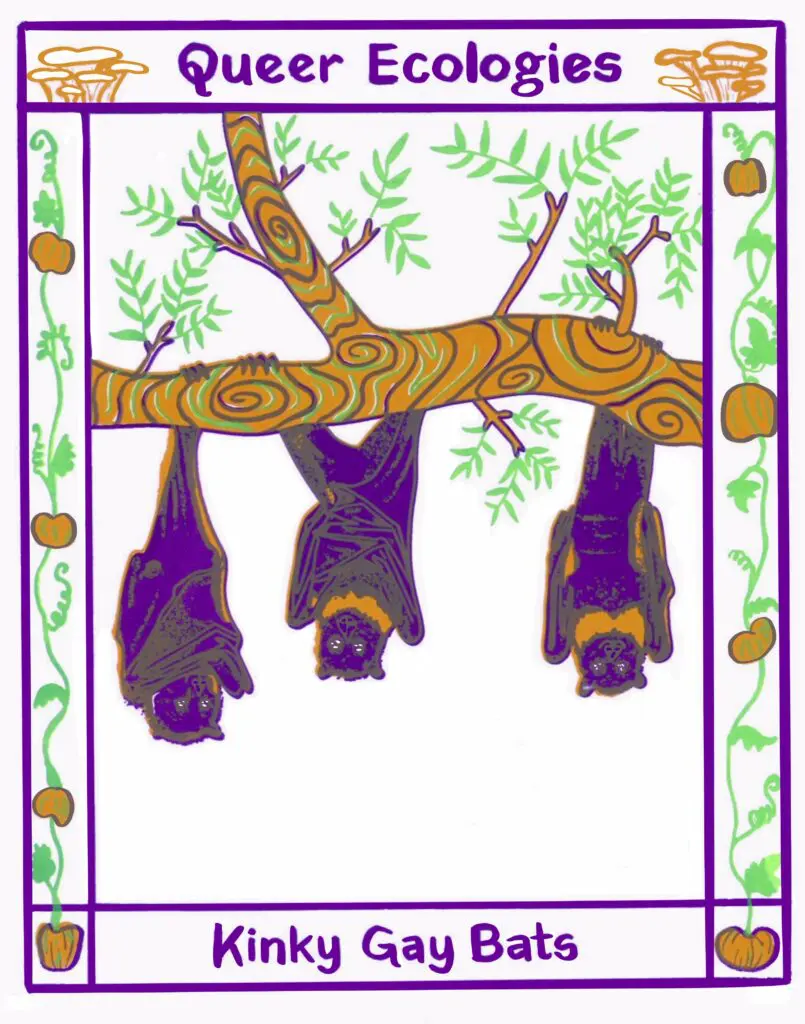
Kinky Gay Bats:
Bats are among the most vocal and social mammals which has helped researchers identify their frequent sexual behavior with the same sex. Because of the sheer number in their colonies, they frequently engage in sex for survival to keep their populations stable. Sometimes multiple bats engage in sexual behavior with one another at the same time. Think bat orgies.
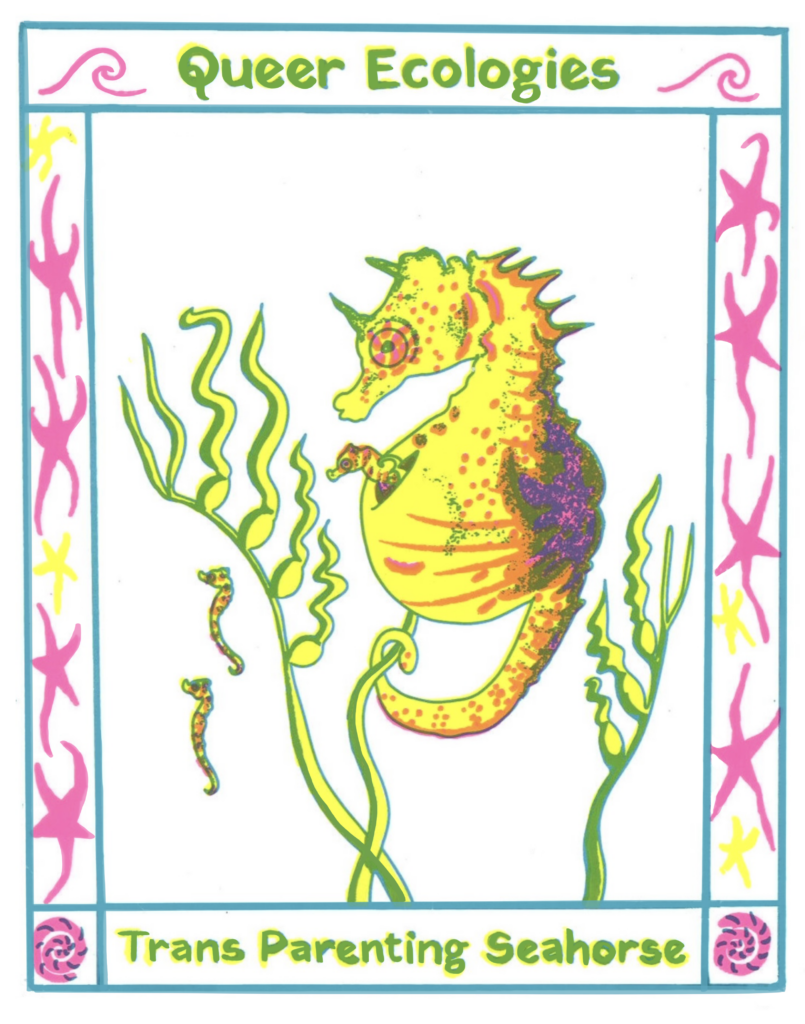
Trans Parenting Seahorse:
One of the most well-known examples of queerness in nature, in seahorses it is the male that gets pregnant and gives birth. Seahorse fathers incubate their developing embryos in a pouch located on their tail. This pouch is the equivalent of the uterus of female mammals. It contains a placenta, supporting the growth and development of baby seahorses.
Since queer ecology has gained more understanding and popularity, a book has recenlty come out called, Forest Euphoria: The Abounding Queerness of Nature, that I highly recommend. After creating my Queer Ecology print series, I have made so many new connections within my community. People have offered me book, podcast, and documentary suggestions and I have been able to learn so much more about the subject and expand how it shows up in my artistic practice.